Choosing a storage unit can feel a bit like packing for a vacation. You start with a few essentials, then somehow end up wondering how six boxes, a bicycle, holiday decorations, and your grandmother's antique rocking chair all appeared on the list.
Whether you're moving, downsizing, renovating, or simply trying to reclaim your garage, selecting the right storage unit size is one of the most important decisions you'll make. Pick a unit that's too small, and you'll be playing an advanced game of furniture Tetris. Pick one that's too large, and you may end up paying for space you don't need.
Here's how Canadians can find the perfect storage unit without the guesswork.
Start with a Quick Inventory
Before comparing unit sizes, take a few minutes to create an inventory of what you'll be storing.
Ask yourself:
- Are you storing boxes only?
- Will furniture be included?
- Do you need space for seasonal items like skis, snowblowers, or patio furniture?
- Are appliances going into storage?
- Will you need regular access to your belongings?
Many storage experts recommend creating a detailed inventory before moving items into storage. It can help you estimate the amount of space you'll need and make organizing easier later. According to storage industry best practices, labeling boxes and maintaining an inventory list can save significant time when accessing stored items.
Common Storage Unit Sizes in Canada
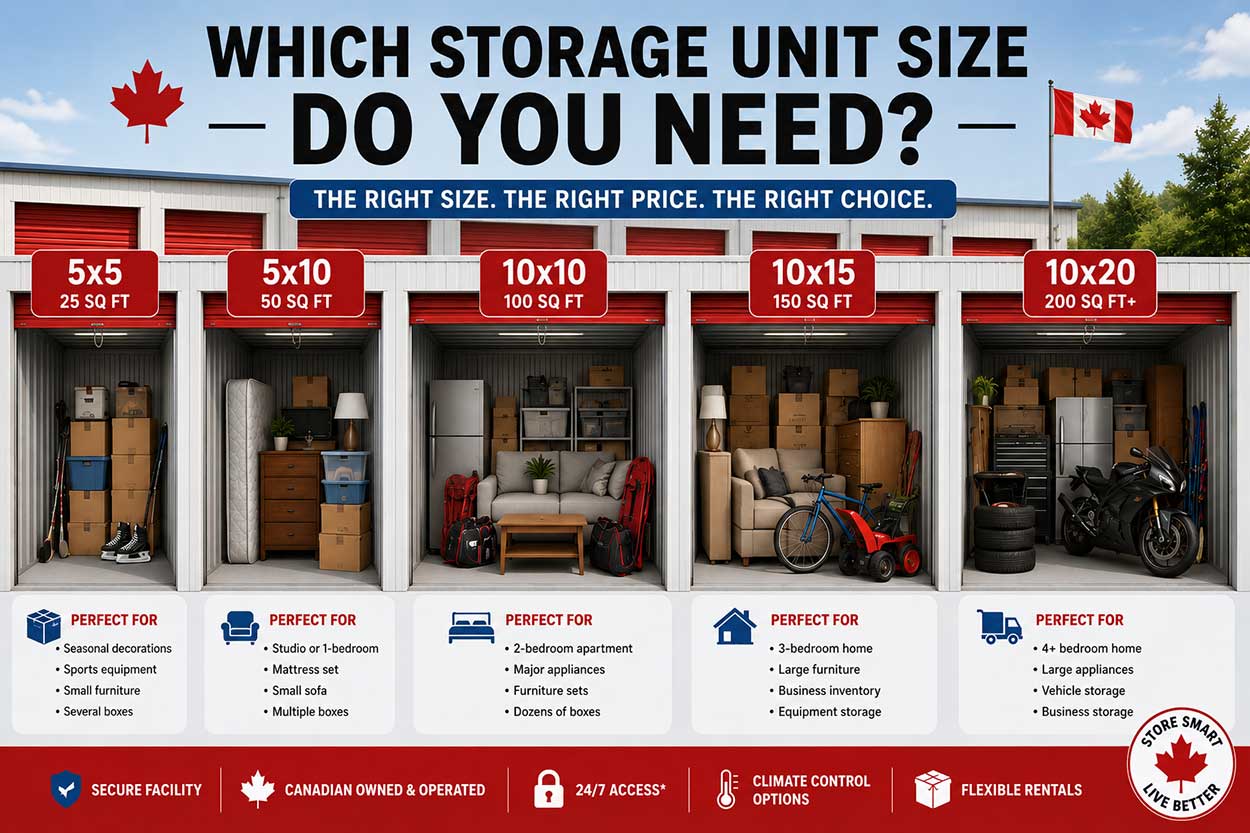
5x5 Storage Unit (25 Square Feet)
Think of this as the storage equivalent of a walk-in closet.
Ideal for:
- Seasonal decorations
- Sports equipment
- Small furniture pieces
- Several boxes
Perfect for students, apartment dwellers, or anyone looking to free up a little extra space at home.
5x10 Storage Unit (50 Square Feet)
A popular choice for people moving between homes.
Typically fits:
- A studio or one-bedroom apartment
- Mattress sets
- Small sofas
- Dressers
- Multiple boxes
If you're storing the contents of a small apartment, this is often the sweet spot.
10x10 Storage Unit (100 Square Feet)
This size can usually accommodate the contents of a two-bedroom apartment or small house.
You'll generally have room for:
- Major appliances
- Furniture sets
- Large mattresses
- Dozens of boxes
Many homeowners choose this size during renovations or temporary relocations.
10x15 Storage Unit (150 Square Feet)
Now we're getting into serious storage territory.
Ideal for:
- Three-bedroom homes
- Large furniture collections
- Business inventory
- Equipment storage
If you're downsizing or preparing a home for sale, this size often provides plenty of flexibility.
10x20 and Larger
Need to store the contents of an entire home? These larger units can accommodate furniture, appliances, outdoor equipment, and even some vehicles, depending on facility regulations.
They're particularly useful for major moves, long-term storage, and business storage needs.
Don't Forget Vertical Space
One of the biggest mistakes people make is only thinking about floor space.
Most storage units offer significant vertical storage capacity. By stacking sturdy boxes safely and disassembling large furniture when possible, you can maximize every square foot. Storage professionals often recommend using uniform-sized boxes and placing heavier items on the bottom for safer, more efficient stacking.
Think of your storage unit as a three-dimensional puzzle—not just a floor plan.
Consider Canada's Climate
Canadian weather can be unpredictable. One day you're enjoying sunshine, and the next you're scraping ice off your windshield.
If you're storing sensitive items such as:
- Electronics
- Wooden furniture
- Important documents
- Photographs
- Musical instruments
you may want to consider a climate-controlled or heated storage unit. Government consumer guidance recommends confirming whether storage facilities are heated during winter months and understanding how temperature changes may affect stored belongings.
Leave Room to Access Your Items
It can be tempting to fill every available inch of space. However, you'll thank yourself later if you leave a small walkway.
Storage experts recommend placing frequently used items near the front of the unit and leaving enough room to access belongings without unpacking everything.
Future You will appreciate not having to excavate through twenty boxes of holiday decorations just to find a winter jacket.
When in Doubt, Size Up Slightly
If you're between sizes, it often makes sense to choose the next size up. The small difference in monthly cost can be worth the convenience, accessibility, and reduced risk of damaging your belongings by overpacking.
The right storage unit should provide enough room for your current needs while allowing a little flexibility for future additions.
And on a Final Note...
Choosing the right storage unit size in Canada doesn't have to be complicated. Start with a detailed inventory, estimate your space requirements realistically, and consider how often you'll need access to your belongings.
Whether you're storing a few seasonal boxes or the contents of an entire home, selecting the right-sized unit can save you money, reduce stress, and make your storage experience far more enjoyable.
After all, storage should solve problems—not create a new one involving a couch that refuses to fit through the storage unit door.
By: Jerilyn Alvarez
Just a Georgia Peach looking to learn how business works one job at a time and trying to make a difference to others each day! Enjoy writing about everyday experiences and connecting with others.